A pet-friendly home corner gives your animal a comfortable place to relax while helping you keep everyday pet items organized. Whether you live in a small apartment or a larger home, a well-planned corner can support your pet’s routine without taking over the room.
The best setup does not need to be expensive or complicated. With a few practical items, easy-to-clean materials, and thoughtful placement, you can create a space that works for both you and your pet.
Choose the Right Location
Start by choosing a quiet area that is still part of your daily living space. Pets often like to be near their people, but they may also need a spot away from heavy foot traffic, loud appliances, and busy doorways.
Good locations may include:
– A corner of the living room
– A section of a home office
– An unused space beneath a staircase
– A calm area near a bedroom
– A section of a mudroom or entryway
Avoid placing the corner beside heaters, drafty windows, tangled cords, or unstable furniture. Keep it away from doors that open frequently, especially if your pet could slip outside when someone enters or leaves.
For homes with children or multiple pets, choose a location where you can easily supervise activity. A visible corner makes it easier to notice when the water bowl needs filling or when bedding needs cleaning.
Create Separate Zones
Even a small pet corner benefits from simple zones. Separating eating, sleeping, playing, and storage areas makes the space easier to use and maintain.
Resting Zone
The resting zone should include a bed, mat, blanket, or cushion suited to your pet’s size. Choose a surface that is easy to wash and comfortable enough for regular use.
Place the bed against a wall or in a protected corner so it feels settled rather than exposed. Some pets prefer an open bed where they can see the room, while others enjoy a covered design that offers more privacy.
If your pet likes to move between rooms, you can keep a main bed in the home corner and add a smaller washable mat in another favorite area.
Feeding Zone
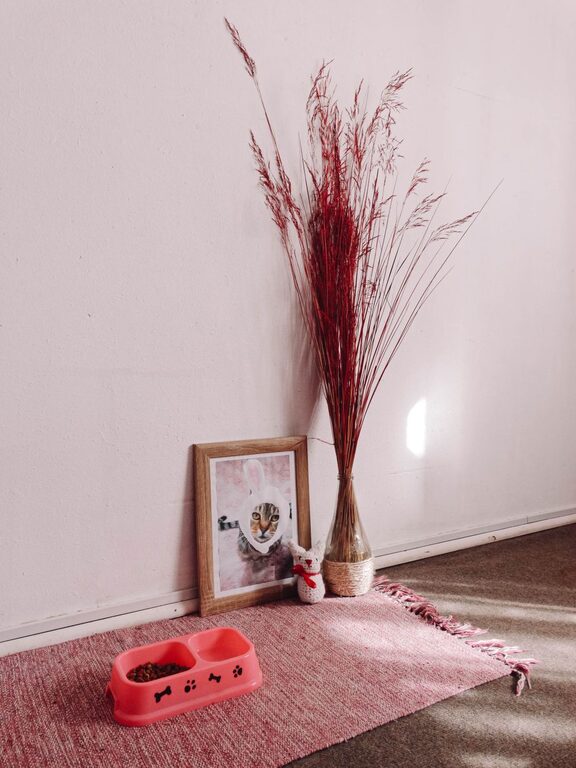
Keep food and water in a stable location that is separate from bedding and toys. A washable mat under the bowls can catch spills and make cleanup faster.
Select bowls that are difficult to tip over. Stainless steel, ceramic, and other durable materials are often practical choices because they are easy to clean and less likely to hold odors than some porous materials.
Leave enough space around the bowls so your pet can eat comfortably. Avoid placing them directly beside walls or in narrow walkways.
Play Zone
A play zone does not need to be large. A basket, low shelf, or small storage bin can hold favorite toys in one place. Keeping toys together reduces clutter and makes it easier to rotate them.
Include a mix of items that suit your pet’s habits, such as:
– Soft toys
– Balls
– Chew-safe toys
– Puzzle toys
– Scratching items for cats
– Fetch or tug toys for dogs
Inspect toys regularly and remove items that are damaged, loose, or difficult to clean. Store small pieces where young children cannot reach them.
Pick Pet-Friendly Materials
Materials make a major difference in how easy the corner is to maintain. Choose surfaces that are durable, washable, and suitable for your pet’s daily activities.
For the floor, consider a washable runner, rubber mat, or low-pile rug. These options can protect the floor while making the area more comfortable. Avoid rugs with long fibers or loose loops that can catch claws or collect debris.
For furniture, use removable covers whenever possible. A washable cover can protect a chair, cushion, or small bench from fur and everyday messes. Smooth surfaces are generally easier to wipe down than rough or highly textured materials.
If you are painting or decorating the space, choose products according to their labels and allow them to dry fully before your pet uses the area. Keep renovation supplies, tools, and small hardware away from animals.
Add Smart Storage
Pet supplies can quickly spread throughout a home, so storage is one of the most useful parts of a dedicated corner. Use containers that are easy to open but secure enough to keep curious pets from getting inside.
Helpful storage ideas include:
– A lidded bin for food and treats
– A basket for toys
– Hooks for leashes and collars
– A small drawer unit for grooming supplies
– A shelf for towels and cleaning cloths
– A container for waste bags
Labeling containers can make daily routines faster, especially if more than one person helps care for the pet. Store food in its original packaging or in a clean, properly sealed container, and keep it in a cool, dry place.
Do not leave treats, medications, cleaning products, or small accessories within easy reach. A closed cabinet or high shelf is a better option for items that should only be used with supervision.
Improve Comfort Without Overcrowding
A pet-friendly corner should feel welcoming, but too many items can make it crowded. Start with the essentials and add accessories gradually based on how your pet uses the space.
Soft lighting can make the corner feel calm, but avoid placing lamps or light cords where they can be knocked over or chewed. A small piece of washable wall art or a simple framed photo can add personality without taking up floor space.
For cats, consider adding a scratching post, window perch, or compact climbing shelf if the location allows it. For dogs, a comfortable mat and a toy basket may be enough. Small pets may need an enclosure, hiding area, or habitat-specific supplies that fit securely in the corner.
Always leave clear paths around the space. Your pet should be able to enter and leave without squeezing between furniture or stepping over clutter.
Keep the Area Clean and Safe
Regular maintenance keeps the corner comfortable and helps prevent odors and buildup. Set aside a few minutes each week to wash bedding, clean bowls, wipe surfaces, and inspect toys.
A simple routine may include:
- Remove loose fur and debris.
- Wash food and water bowls.
- Shake out or vacuum the mat.
- Launder bedding according to its care instructions.
- Wipe storage bins and nearby surfaces.
- Check for damaged toys, loose threads, or unstable items.
- Restock food, waste bags, and cleaning supplies.
Secure nearby cords with suitable organizers, and avoid using fragile decorations at floor level. Make sure shelves, hooks, and storage units are firmly attached. If you use a gate or enclosure, check that it is stable and appropriate for your pet’s size and behavior.
Adjust the Corner Over Time
Your pet’s needs may change as routines, seasons, or living arrangements change. Watch how your pet uses the space and make small adjustments when needed.
If the bed is rarely used, try moving it to a quieter or more social location. If toys are scattered around the house, add a larger basket or reduce the number available at one time. If the feeding area is difficult to clean, place a larger mat underneath it or move it to a surface with easier access.
A successful pet corner is not defined by its appearance alone. It should make daily care simpler, give your pet a dependable place to relax, and fit naturally into your home. By choosing a suitable location, separating basic zones, and keeping supplies organized, you can create a welcoming space that works for everyone.
About the Author