Journaling is a simple way to pause, write down your thoughts, and pay attention to your everyday experience. You do not need special writing skills, a perfect notebook, or a large amount of free time to begin. A few honest sentences can be enough.
For beginners, the hardest part is often knowing what to write and how to make journaling a regular habit. This guide explains how to start, choose a routine, find useful prompts, and keep going without putting pressure on yourself.
What Is Daily Journaling?
Daily journaling means writing regularly about your thoughts, experiences, plans, questions, or observations. Some people write in the morning, while others prefer the evening. Some fill several pages, while others write a short list.
There is no single correct journaling style. Your journal can be:
– A place to record what happened during the day
– A space to organize your thoughts
– A list of goals and priorities
– A collection of ideas and observations
– A way to notice patterns in your routines
– A private record of personal experiences
The most useful journal is one you can use comfortably and consistently.
Choose a Simple Journaling Method
Starting with a simple method makes the habit easier to maintain. You can always change your approach later.
Free writing
Free writing involves putting your thoughts on the page without worrying about structure, grammar, or quality. Set a timer for five to ten minutes and write whatever comes to mind.
If you feel stuck, begin with a phrase such as:
– “Right now, I am thinking about…”
– “Today began with…”
– “One thing on my mind is…”
Keep writing, even if your sentences feel repetitive. The goal is to continue, not to create polished work.
Guided journaling
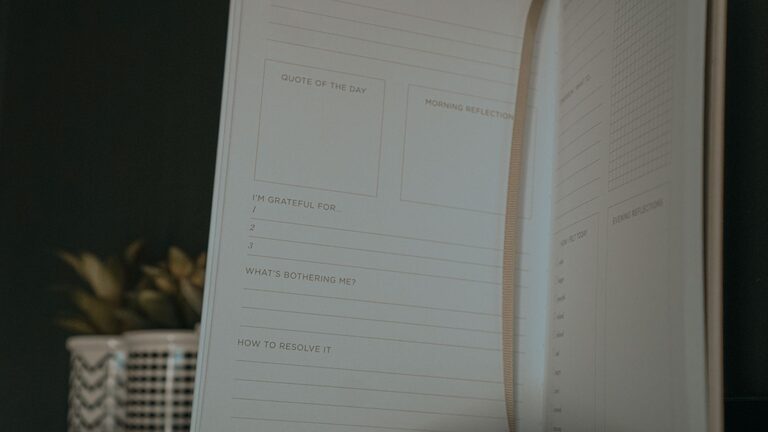
Guided journaling uses questions or prompts to give your writing a clear direction. This is helpful when a blank page feels intimidating.
You might answer one question each day, such as:
– What went well today?
– What would I like to remember?
– What is one task I want to complete?
– What did I learn?
– What would make tomorrow easier?
Bullet journaling
Bullet journaling uses short notes, lists, and symbols instead of long paragraphs. It can combine journaling with planning.
A simple entry might include:
– Three important tasks
– One event from the day
– A quick mood or energy note
– An idea to explore later
– A short reflection
This format works well if you like structure or prefer writing less.
Pick the Right Time and Place
A regular time can help journaling become part of your routine. Consider connecting it with an activity you already do, such as drinking coffee, eating breakfast, or getting ready for bed.
Morning journaling can help you:
– Set priorities
– Record ideas from the night before
– Decide how you want to approach the day
– Clear your mind before starting work
Evening journaling can help you:
– Review the day
– Record memorable moments
– Notice what you learned
– Prepare for the next day
Choose a quiet, comfortable place where your journal is easy to reach. You can write at a desk, on a sofa, or in another familiar spot. The best location is one that makes the habit convenient.
Start With a Small Goal
Many beginners start with an ambitious plan and quickly feel discouraged. Instead, begin with a goal that feels easy.
Try one of these options:
– Write for five minutes
– Complete three sentences
– Record three things you noticed
– List one priority for tomorrow
– Write one paragraph each day
A small goal is not less valuable than a long entry. The purpose is to build consistency and become comfortable with the practice. Once journaling feels natural, you can write more when you want to.
It can also help to set a minimum and an optional extra. For example, your minimum might be three sentences, while extra writing is welcome when you have more time.
Use Prompts When You Feel Stuck
A blank page can make it difficult to begin. Keep a list of prompts nearby so you always have a starting point.
Daily reflection prompts
– What was the most memorable part of today?
– What made me smile?
– What was more difficult than expected?
– What did I handle well?
– What would I like to do differently next time?
Planning prompts
– What are my three main priorities?
– What is one small step I can take today?
– What might distract me, and how can I prepare?
– What can I postpone, simplify, or remove?
– What would make the day feel successful?
Creative prompts
– Describe an object near you in detail.
– Write about a place you would like to visit.
– Begin a story with “When I opened the door…”
– Make a list of unusual questions.
– Describe a favorite sound, smell, or view.
You do not have to answer prompts exactly as written. Use them as invitations to explore an idea.
Make Journaling Comfortable
Your journal should fit your preferences. Some people enjoy a paper notebook and a favorite pen. Others prefer a notes app, document, or dedicated writing tool.
Consider the following:
– Use a notebook that is easy to carry.
– Keep your writing materials in a visible location.
– Choose a digital option if typing feels more natural.
– Avoid buying too many supplies before you know what you like.
– Use a format that does not create extra work.
You can also personalize your entries with headings, dates, sketches, checklists, or simple symbols. The goal is to make journaling inviting rather than demanding.
Do Not Aim for Perfect Entries
A journal is not a school assignment. Spelling, handwriting, grammar, and organization do not need to be perfect. Your entries may be thoughtful one day and brief or disorganized the next.
Some days, you may write several pages. On other days, you may write only, “I am tired, and today was busy.” That still counts. A short entry can help you maintain the habit and create a record of your experience.
Try not to judge your writing while you are doing it. You can review it later if you want, but journaling does not need to produce a finished piece of writing.
Build Consistency Without Pressure
Missing a day does not mean you have failed. Daily habits are built over time, and interruptions are normal. If you skip a day, simply begin again at the next opportunity.
To make the habit easier:
– Link journaling to an existing routine.
– Set a gentle reminder.
– Keep your journal within reach.
– Use a short minimum on busy days.
– Track your practice if you enjoy seeing progress.
– Give yourself permission to change your method.
It may also help to create a weekly check-in. Look at the past few entries and notice what topics, activities, or questions appear often. You do not need to analyze everything. A few observations can help you understand what kind of journaling is most useful.
Protect Your Privacy
Because journals often contain personal thoughts, choose a storage method that feels secure. If you use a paper notebook, keep it in a private location. If you write digitally, use the privacy and security features available on your device or app.
You do not need to write about anything you do not want to record. A journal should be a space where you can choose what to include and what to leave out.
A Simple Seven-Day Plan
Use this beginner-friendly plan to get started:
- **Day one:** Write three sentences about your current day.
- **Day two:** List three priorities for tomorrow.
- **Day three:** Describe one moment you want to remember.
- **Day four:** Write about something you learned.
- **Day five:** Make a list of ideas, questions, or plans.
- **Day six:** Reflect on what has been going well.
- **Day seven:** Review the week and choose a journaling style to continue.
After seven days, decide what felt easiest and most useful. You can keep that format, combine several methods, or try something new.
Final Thoughts
Daily journaling does not require a complicated system. Start with a few minutes, choose a convenient time, and write in a way that feels natural. Short entries are useful, imperfect entries are welcome, and missed days are part of building a long-term habit.
The most important step is simply opening the page and beginning. Over time, those small moments of writing can become a valuable record of your thoughts, plans, ideas, and everyday life.
About the Author